Import Intelligence Software for Tariff, Duty Stack & Landed Cost Analysis
Logitality helps importers, customs brokers, and procurement teams analyze tariffs, trade measures, classification risk, landed cost, VAT, IGST, FX exposure, and compliance notes across US, EU, and India import markets.
A duty rate is only the first question.
Import decisions change when duties, trade measures, VAT or IGST, FX movement, and supply depth are viewed together. Logitality turns an HS code and destination market into an import-ready risk and landed-cost view.
Full duty stack
Analyze MFN duty, origin treatment, Section 232, Section 301, TARIC rates, CBIC BCD, SWS, IGST, and other measures where available.
Landed-cost impact
Convert duties and recoverable taxes into a practical landed-cost index so import teams can compare origin-country economics.
Classification risk
Surface HS8, HTS10, and TARIC classification sensitivity where a more specific tariff line can materially change the duty result.
Import intelligence software for customs brokers, import managers, and procurement teams.
Import intelligence helps teams understand tariff exposure, trade measures, landed cost, supplier-origin risk, and compliance questions before purchase orders are issued or shipments are booked.
For customs brokers
Explain duty stack, classification sensitivity, trade-measure exposure, and broker-verification steps in a client-ready format.
For import managers
Compare origin countries by estimated landed-cost impact, recoverable tax treatment, FX exposure, and supply depth before goods move.
For procurement teams
Connect import duty and trade-policy risk to supplier-country selection, sourcing scenarios, and RFQ timing.
Built for the import markets where duty complexity matters most.
Logitality's strongest import coverage today is focused on the United States, European Union, and India, with BACI 2024 supply depth used to rank origin countries.
United States
- HTS10 MFNOfficial tariff-line duty, not HS6 averages
- Section 232Steel and aluminium measures, including
50%stack logic - Section 301China-specific rates mapped by HTS10
- Trade measuresADD / CVD / safeguard rows from
us_trade_measures - Origin impactBreak-even analysis by effective duty tier
- ClassificationHTS8 / HTS10 support where available
European Union
- TARIC10 MFN
7,448tariff lines loaded - CN8 coverage
5,929classifications across3,844HS6 codes - ADD flags
95TARIC lines currently marked - ClassificationDuty range and break-even where TARIC rates differ
- Intra-EU
0%duty for all 27 member-state origins - PreferencesGSP / FTA expansion planned
India
- HS8 / CTHBCD from CBIC customs tariff data
- SWSSocial Welfare Surcharge at
10% of BCD - IGSTHSN-linked import GST treatment
- Gross stackBCD + SWS + IGST landed tax view
- RecoveryIGST recoverable through GST filing where eligible
- PolicyFree / Restricted / Prohibited where available
Nine import intelligence layers. One landed-cost decision.
Each report combines tariff data, trade measures, supply depth, FX, feedstock pressure, and AI guidance into a practical import decision.
1. Duty & tax analysis
Import duty, VAT, IGST, SWS, and trade measures combined into a landed-cost comparison across origins.
2. Trade-measure stack
Section 232, Section 301, ADD/CVD, safeguards, quotas, and origin-specific duty effects where available.
3. Classification impact
HTSUS, TARIC, and CBIC classification sensitivity where detailed tariff lines can change duty exposure.
4. Origin ranking
Supplier origins ranked by market share, duty treatment, supply depth, and corridor economics.
5. Break-even analysis
Shows how much lower a higher-duty origin must quote to match the cheapest landed-cost tier.
6. FX exposure
90-day buyer-vs-origin currency movement with adverse and favourable changes explained in import terms.
7. Feedstock pressure
Commodity and energy signals mapped to product cost drivers such as steel, copper, crude, gas, dairy, and chemicals.
8. Compliance notes
Destination-market import considerations, product restrictions, classification warnings, and broker verification steps.
9. AI decision guide
Default recommendation plus scenario alternatives if tariffs, FX, supply depth, or policy conditions change.
Real corridor examples make the duty impact visible.
Use screenshots from live Logitality reports to show Google and buyers the actual workflow: duty stack, origin ranking, classification risk, and sourcing decision logic.
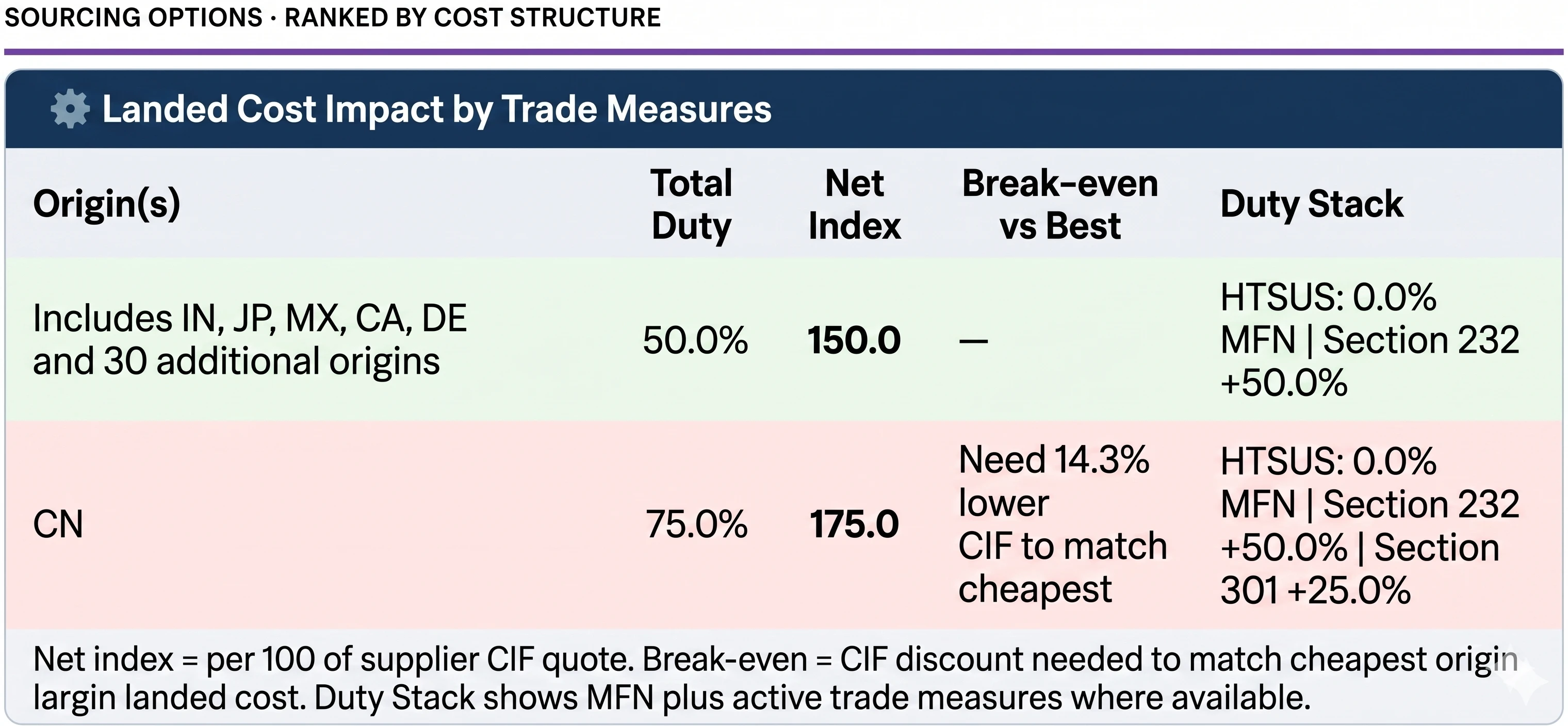
HS 761699 → US
Shows HTSUS duty, Section 232 aluminium exposure, China-origin Section 301 stack logic, and break-even by origin.
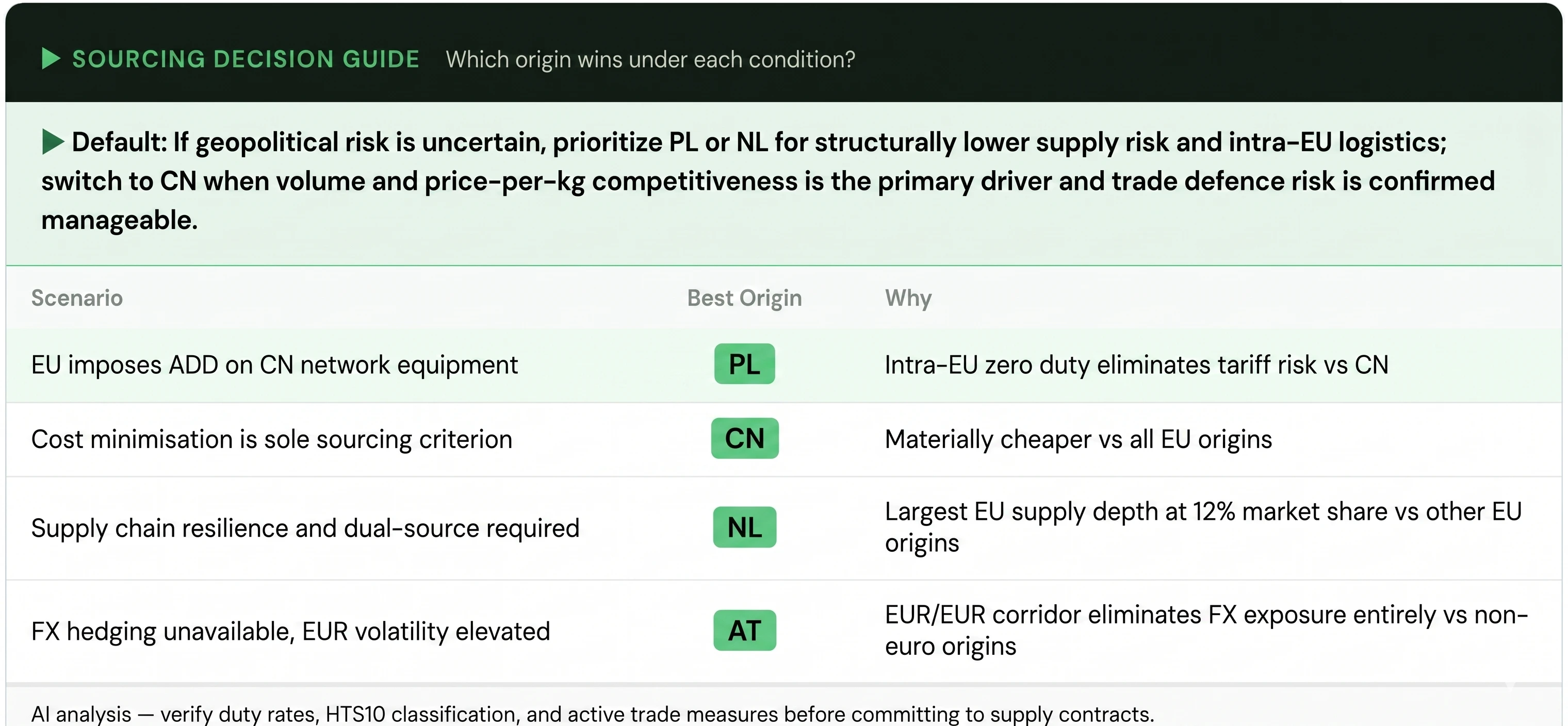
HS 731815 → DE
Shows TARIC MFN treatment, intra-EU zero-duty origins, tariffed third-country origins, and CIF break-even discount.
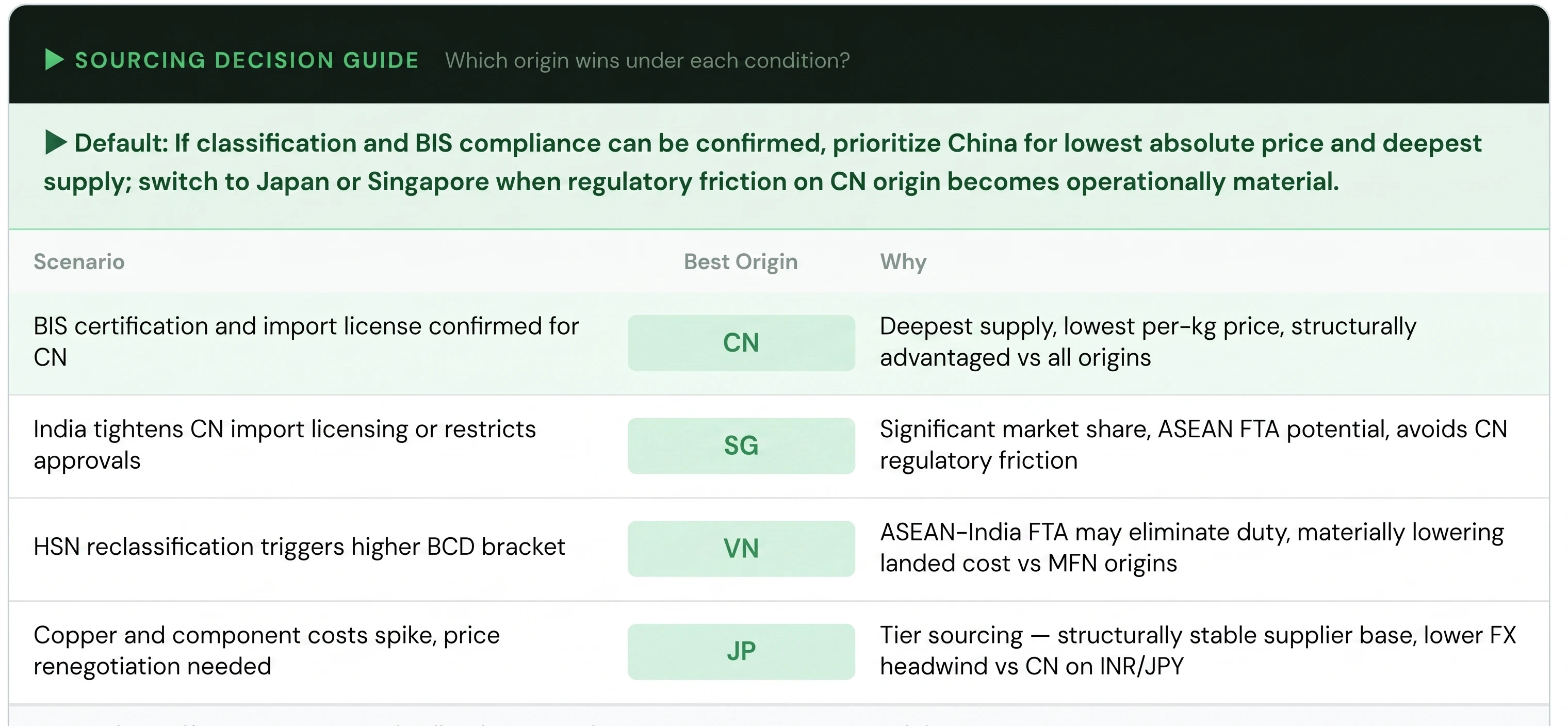
HS 851762 → IN
Shows CBIC BCD, SWS, IGST recovery, HSN classification sensitivity, and landed-cost range for India importers.
A tariff lookup gives a rate. Logitality shows the decision impact.
| Question | Basic tariff lookup | Logitality import intelligence |
|---|---|---|
| What is the MFN rate? | Usually strong | Included |
| What is the full duty stack? | Often manual | Combines duty, trade measures, and origin treatment |
| Which origin is cheaper after duty? | Not usually answered | Origin ranking and break-even logic |
| Does classification change the result? | Requires separate tariff-line review | Classification impact flagged where data supports it |
| What should the importer do next? | Rate only | Decision guide, risk signals, and compliance notes |
Built for the teams responsible for import cost, customs risk, and supplier-origin decisions.
Logitality is useful when a shipment decision depends on more than supplier price: classification, duty stack, recoverable tax, trade measures, FX, and compliance all matter.
Explain the full duty picture
Show clients why one origin may survive the full duty stack while another needs a lower CIF quote to compete.
Control landed-cost exposure
Review duties, recoverable tax, FX movement, and compliance issues before purchase orders or shipments move.
Spot classification and measure risk
Identify where HTS, TARIC, or CBIC classification can materially change duty or require broker verification.
Connect customs cost to sourcing
Compare origin countries by duty, market share, supply depth, and landed-cost structure before sourcing decisions are finalized.
From HS code to import decision in under a minute.
No ERP integration. No data upload. Enter a product code and destination market — Logitality builds the import corridor automatically.
Import Intelligence FAQ
What is import intelligence?
Import intelligence combines tariff rates, trade measures, landed-cost analysis, supply depth, FX exposure, commodity cost signals, and compliance considerations to support sourcing and customs decisions before goods are imported.
How is Logitality different from a tariff lookup tool?
Most tariff lookup tools stop at the duty rate. Logitality combines duty analysis, trade measures, BACI trade flows, landed-cost impact, FX movement, commodity signals, break-even analysis, and AI decision guidance.
Which import markets does Logitality support?
Logitality currently provides the strongest import intelligence coverage for the United States, European Union, and India using HTSUS, TARIC, CBIC, BACI 2024, FX, and commodity data.
Can Logitality compare supplier origins by landed cost?
Yes. Logitality compares supplier origins using duty treatment, recoverable tax, market share, supply depth, trade measures, FX exposure, and landed-cost index analysis where data is available.
Explore adjacent workflows.
Import intelligence focuses on tariffs, duties, trade measures, landed cost, and compliance. Use these related pages for sourcing, export, methodology, and customs-broker workflows.
Run an import corridor now
Start with an HS code and destination market. See the duty stack, landed-cost impact, and origin ranking before the shipment moves.
Start free →